




В качестве сырья для производства ПСУ используется базовая форма полисульфона (ПСУ), высокоэффективного термопластичного полимера, широко применяемого в отраслях промышленности, требующих исключительной термостойкости, долговечности и химической стабильности. В этой статье мы рассмотрим свойства материалов из ПСУ, процессы производства, сравнение с другими высокоэффективными пластмассами и аспекты устойчивого развития.
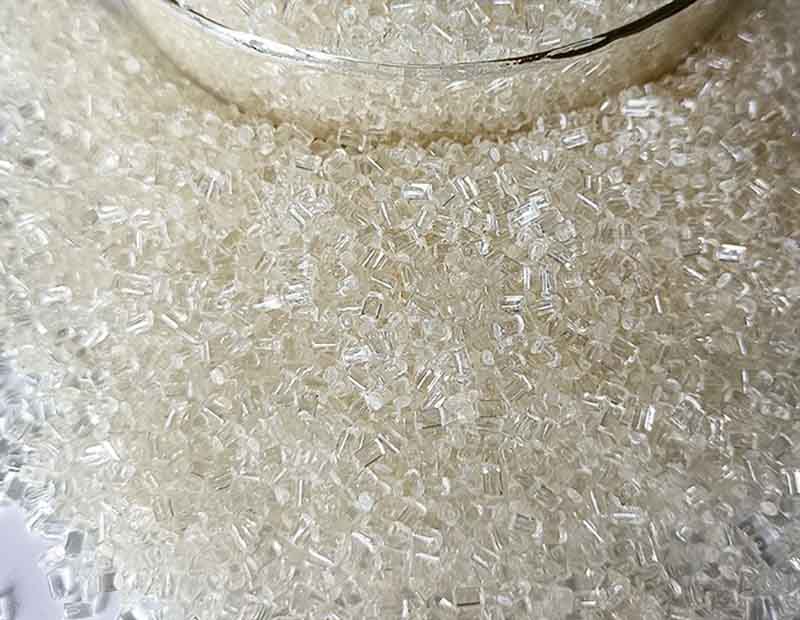
1. Обзор материалов для блоков питания.
Полисульфоновые материалы относятся к семейству полисульфонов, известных своей превосходной размерной стабильностью, высокой температурой стеклования (~185°C) и механической прочностью. Эти высокотемпературные полисульфоновые материалы имеют прозрачный или янтарный цвет, обеспечивая баланс прочности и жесткости.
Основные характеристики сырья для производства блоков питания:
Исключительная термостойкость до 170°C при непрерывной эксплуатации.
Обладает хорошей химической стойкостью к кислотам, щелочам и моющим средствам.
Высокая гидролитическая стабильность – идеально подходит для многократной стерилизации паром.
Отличные электроизоляционные свойства в широком диапазоне температур.
К числу распространенных областей применения относятся медицинские приборы, системы фильтрации воды, электрические компоненты и детали для аэрокосмической отрасли.
2. Физические и химические свойства сырья для производства ПСУ.
При оценке свойств сырья для производства ПСУ выделяются несколько физических и химических характеристик:
| свойство | типичное значение |
|---|---|
| температура стеклования (tg) | ~185°C |
| непрерывная рабочая температура | 150–170°С |
| предел прочности | 70–85 МПа |
| водопоглощение (24 ч) | <0.3%<> |
| chemical resistance | excellent against acids/alkalis |
chemical resistance of psu materials makes them suitable for environments with aggressive cleaning agents. however, they may be sensitive to strong oxidizers and certain hydrocarbons.
3. psu raw materials manufacturing process
the psu manufacturing process generally involves:
condensation polymerization – combining bisphenol a (bpa) or bisphenol s with dichlorodiphenyl sulfone under alkaline conditions.
purification – removing impurities, solvents, and unreacted monomers.
pelletizing – converting into granules for easy processing.
quality control – testing melt flow, thermal stability, and mechanical strength.
processing methods for psu materials include injection molding, extrusion, and thermoforming. pre-drying is crucial to avoid moisture-related defects during molding.
4. psu vs ppsu vs peek: a high-performance plastics comparison
| свойство | psu | ppsu | peek |
|---|---|---|---|
| max continuous use temp | 170°c | 180°c | 250°c |
| impact resistance | good | excellent | excellent |
| transparency | transparent/amber | transparent/amber | opaque (usually beige) |
| cost | moderate | higher than psu | much higher |
| chemical resistance | good | better than psu | outstanding |
ppsu (polyphenylsulfone): higher impact and chemical resistance than psu; widely used in healthcare and aerospace.
peek (polyetheretherketone): best high-temperature and chemical resistance; premium price point.
for buyers comparing psu vs ppsu vs peek, psu offers the best balance between cost and performance.
5. sustainability and psu plastic recycling
sustainability in psu raw materials is becoming a key consideration for manufacturers:
long life cycle reduces replacement frequency and waste.
psu plastic recycling process allows reprocessing of clean scrap into new products.
ongoing research in chemical recycling of psu materials aims to depolymerize waste into reusable monomers.
environmentally conscious production methods include minimizing solvent usage, optimizing energy consumption, and adopting closed-loop manufacturing systems.
psu raw materials deliver outstanding thermal stability, mechanical performance, and chemical resistance, making them a reliable choice for demanding industries. whether in medical devices, water treatment systems, or aerospace components, psu materials remain an essential high-performance plastic. with advances in recycling and eco-friendly manufacturing, psu continues to be a sustainable material choice for the future.
